

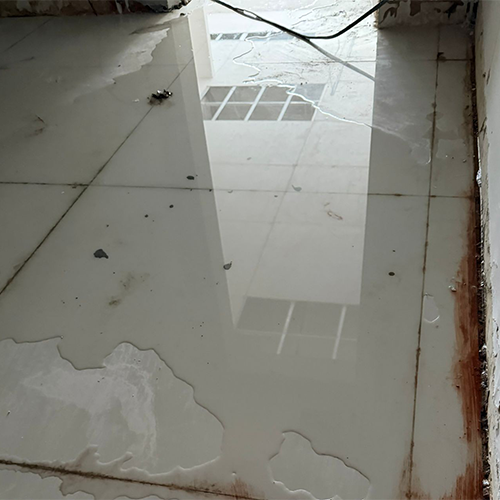
Basement water infiltration is one of the more difficult waterproofing problems for property owners to diagnose. Unlike an obvious pipe leak, basement water seepage may appear as a small damp patch, a wall brown stained mark, a wet concrete floor or occasional water dripping through a crack.
The visible symptom, however, may not be the actual source of the problem.
Water can travel through concrete, construction joints, wall cracks, pipe penetrations and concealed spaces before eventually appearing at a completely different location. This is why simply sealing the visible area does not always resolve a waterproofing leak permanently.
For landed property owners, basement water infiltration can affect garages, storage areas, home offices, plant rooms and living spaces. For commercial properties, the consequences can be even more serious because water may affect car parks, electrical rooms, mechanical rooms, lift pits, storage areas and other operational spaces.
Understanding the possible sources of water leakage is therefore the first step towards selecting the right waterproofing solution treatment.
What Is Basement Water Infiltration?
Basement water infiltration happens when water finds its way into a basement through weak points in the building structure or its waterproofing system. The source can be varied, ranging from surrounding ground and rainwater to plumbing problems. Water may enter through concrete cracks, micro cracks, wall cracks, wall joint cracks, construction joints, expansion joints, wall-to-floor joints or gaps around pipe penetrations. In older properties, the waterproofing membrane may also have worn out over time, allowing ground/soil water seepage to gradually enter the basement. In some situations, increased water pressure from the surrounding soil can further force water through these vulnerable areas.
For landed properties and commercial buildings in Singapore, basement water infiltration often becomes more noticeable during periods of heavy rainfall. When the surrounding soil becomes saturated, the pressure of the water against the basement walls and floor slab can increase. This may force water through even small cracks or weak points in the concrete. Rain water seepage can also occur through basement ramps, retaining walls, drainage areas and damaged external waterproofing. What may initially appear to be a small damp patch can therefore develop into a recurring water seepage problem if the underlying cause is not addressed.
One of the most challenging aspects of basement leakage is that the area where water appears may not be the actual source. Water can travel through concealed cracks, concrete joints and internal pathways within the structure before eventually emerging at another location. For example, a wall brown stained mark or damp concrete surface may be several metres away from where the water originally entered. Similarly, a concrete slab damage/stain/leak may be caused by water migrating from an adjacent wall or joint rather than a defect directly beneath the affected area.
A proper investigation can help determine whether the problem is related to groundwater, rainwater, a concealed pipe leak, concrete defects, damaged joints or waterproofing failure. Depending on the situation, professional assessment may include visual inspection, moisture assessment and thermal leak detection. By identifying the actual water pathway first, property owners can avoid unnecessary repairs and select a more appropriate waterproofing solution treatment.
Why Is It Difficult to Identify the Source of a Basement Leak?
One of the biggest mistakes property owners make is assuming that the visible water stain is the source.
For example, a basement wall may have a wall brown stained mark near the bottom. The immediate assumption may be that water is entering directly through that location. However, water could have entered through a higher wall joint crack and travelled internally through the concrete before emerging lower down.
Similarly, water appearing on a basement floor does not necessarily mean that the floor slab itself is defective. Water may have travelled from an adjacent wall, construction joint or concealed pipe before accumulating on the floor.
Professional waterproofing investigation should focus on water movement and entry pathways, rather than simply repairing the visible damage.
Common Sources of Basement Water Leakage
There are several common sources of basement water infiltration in landed and commercial properties.
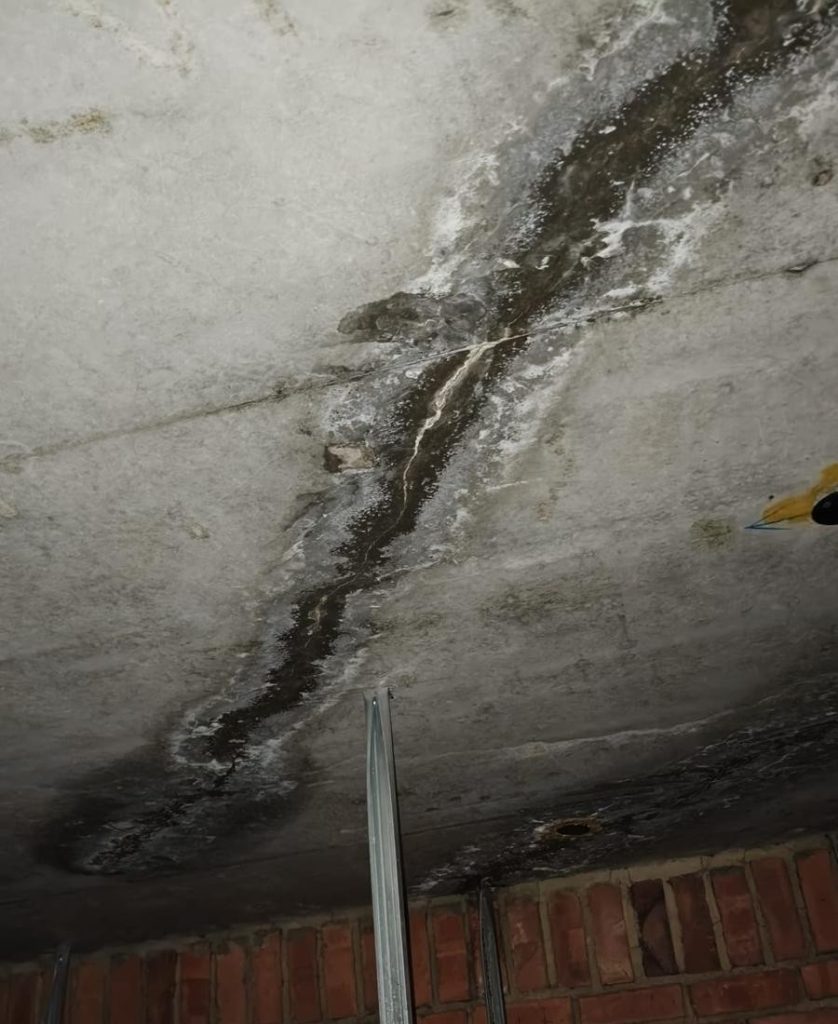
1. Concrete Cracks and Micro Cracks
Concrete is strong and durable, but it is not completely immune to cracking.
Concrete may develop:
- Micro cracks
- Hairline cracks
- Shrinkage cracks
- Movement cracks
- Settlement-related cracks
- Construction-related cracks
- Cracks caused by thermal movement
Some cracks may remain dry for years. However, when water pressure increases, they can become pathways for water infiltration.
A small crack can therefore become a significant waterproofing leak when surrounding soil becomes saturated following prolonged rainfall.
2. Wall Cracks and Wall Joint Cracks
Basement wall cracks deserve particular attention because walls are exposed to moisture from the surrounding ground.
Wall joint cracks can be especially vulnerable because joints represent transitions between different sections or materials.
Water may enter through these weak points and travel through the wall before appearing internally.
Property owners should therefore inspect:
- Horizontal cracks
- Vertical cracks
- Wall-to-floor joints
- Construction joints
- Expansion joints
- Pipe penetration areas
- Previous repair locations
A wall crack should not automatically be assumed to be the sole cause of the leak. Its location, width, movement and relationship to surrounding dampness should be assessed.
3. Ground/Soil Water Seepage
Ground/soil water seepage is a common concern for below-ground structures.
When soil surrounding a basement becomes saturated, water pressure against the basement structure can increase. If the waterproofing system is damaged or there are weak points in the concrete, water may find a pathway into the basement.
This can become more noticeable after heavy rainfall.
Typical symptoms include:
- Damp basement walls
- Water emerging through cracks
- Wet wall-floor junctions
- Efflorescence
- Persistent dampness
- Water pooling on the floor
- Recurring water seepage after rain
Groundwater-related infiltration should be distinguished from plumbing problems because the repair strategy can be completely different.
4. Rain Water Seepage
Singapore experiences frequent heavy rainfall, and intense rain can expose weaknesses that may not be obvious during dry periods.
Rain water seepage may enter a basement through:
- Basement ramps
- External walls
- Retaining walls
- Cracked concrete
- Damaged drainage systems
- Landscape areas
- Poorly sealed openings
- Failed waterproofing details
If a basement leak appears mainly after heavy rain and gradually reduces during dry weather, rainfall should be considered an important diagnostic factor.
5. Waterproofing Membrane Worn Out
Basement waterproofing systems can deteriorate with age.
A waterproofing membrane worn out through ageing, physical damage, movement or poor installation may no longer provide adequate protection.
In some properties, previous renovation or construction works may also have damaged the waterproofing layer.
A membrane failure can result in persistent water seepage even when the concrete itself appears relatively intact.
However, replacing the entire waterproofing membrane is not necessarily the only solution. The appropriate treatment depends on the condition of the structure, accessibility, extent of the defect and location of water entry.
6. Pipe Leak and Concealed Pipe Leak
Not every basement leak is a waterproofing problem.
A pipe leak can introduce significant amounts of water into a building, especially where supply or drainage pipes run through concealed spaces.
A concealed pipe leak can be particularly difficult to identify because the damaged pipe may be hidden behind walls, ceilings, floors or service shafts.
Warning signs may include:
- Localised dampness
- Continuous water accumulation
- Water appearing even during dry weather
- Unexpected increases in water usage
- Dampness near plumbing routes
- Persistent moisture despite waterproofing repairs
This is why plumbing-related causes should be considered before carrying out extensive waterproofing works.
7. Concrete Slab Damage, Stain and Leak
Basement floors and structural slabs can experience various forms of deterioration.
A concrete slab damage/stain/leak may appear as:
- Dark patches
- Water stains
- Cracks
- Efflorescence
- Peeling coatings
- Damp areas
- Active water seepage
- Localised ponding
The visible stain itself does not necessarily indicate the exact entry point.
Water may migrate through the concrete slab before becoming visible on the basement surface. In some situations, the water may also move laterally before appearing several metres away from its original entry point.
Therefore, investigating the surrounding area is important when assessing a concrete leak.
8. Concrete Grouting Expansion and Hairline Cracks
Another area that requires careful assessment is previous concrete grouting work.
Concrete grouting expansion refers to the behaviour of injected or grouted materials as they react, expand or cure within cracks and voids. The suitability of the grout depends on the type of defect, water condition and required performance.
A concrete grout hairline crack may appear insignificant on the surface, but if water continues to move through the concrete, the repaired area may require further assessment.
Previous repairs should therefore be examined rather than automatically assumed to be effective.
Poor workmanship, unsuitable materials or incorrect application can contribute to recurring waterproofing failure.
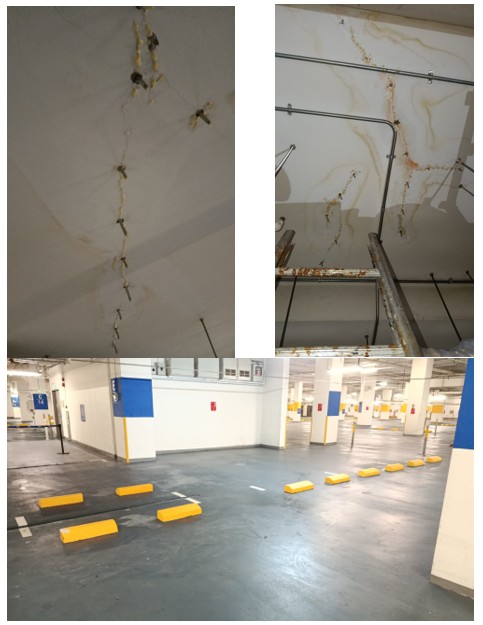
Benefits of PU Injection Grouting for Basement Waterproofing
The method involves injecting polyurethane resin into suitable cracks, voids, joints or water pathways. Depending on the product and application, the resin can react with moisture and expand to fill gaps and restrict water movement.
SWC Construction identifies PU grouting as one of its waterproofing services and describes its use for filling cracks and voids in concrete slabs, joints, floors and ceilings.
1. Targeted Treatment
PU Injection grouting can be applied directly to identified leakage pathways rather than automatically removing large areas of existing finishes.
This makes it particularly useful when the defect is localised.
2. Suitable for Water-Carrying Cracks
Polyurethane injection systems can be selected for situations where active water is present, depending on the specific product and site conditions.
The expanding resin can help fill cracks and voids through which water is travelling.
3. Can Reduce the Need for Extensive Hacking
One major advantage of an appropriately designed injection repair is that it can sometimes be carried out as a non-hacking waterproofing method.
Instead of removing an entire basement floor or wall finish, targeted injection points may be used to access the affected crack or joint.
This can significantly reduce the amount of dust, noise and construction debris generated during the repair process. It also helps minimise downtime and disruption to building operations, allowing occupants, businesses or residents to continue their daily activities with less inconvenience. By avoiding extensive hacking and demolition, the waterproofing works can often be carried out in a cleaner, quieter and more efficient manner. For commercial buildings, minimising disruption can be particularly valuable.
4. Useful for Concrete Cracks and Joints
PU injection may be considered as a suitable waterproofing repair method for various types of concrete defects and water leakage, including concrete cracks, construction joints, wall-floor joints, concrete slab leaks, water-bearing cracks and voids within concrete. By injecting polyurethane material into the affected areas, the treatment can help seal water pathways and reduce further water penetration. However, the suitability and effectiveness of PU injection depend on the actual site conditions, the type and extent of the defect, and the source of the leakage. A proper site inspection should therefore be carried out to determine whether PU injection is an appropriate solution for the specific leakage problem.
5. Can Address Hidden Water Pathways
Because water can travel through internal cracks and voids, treating only the surface may not be enough.
Injection grouting is designed to penetrate the relevant pathway and fill suitable voids within the concrete system.
6. Minimises Unnecessary Replacement
Where the existing structure and finishes remain serviceable, targeted waterproofing treatment may help avoid unnecessary large-scale demolition and minimise disruption to the surrounding areas. This approach can be particularly beneficial for finished basements, commercial car parks, plant rooms, retail premises, offices, private garages and high-value landed properties, where extensive hacking and reinstatement may result in significant costs, downtime and inconvenience. By focusing treatment on the identified areas of water ingress, the repair process can be carried out more efficiently while preserving existing finishes and reducing unnecessary construction work.
7. Faster Repair for Certain Localised Problems
A targeted PU injection repair can sometimes be completed considerably faster than removing and rebuilding an entire waterproofing system.
The actual duration depends on the number and severity of defects, water conditions, access and curing requirements.
8. Can Be Combined with Other Waterproofing Treatments
PU injection should not be regarded as a universal solution. Depending on the investigation findings, it may be combined with other waterproofing systems or surface treatments.
For example, a basement with localised concrete leakage may require injection treatment at specific cracks together with additional protection to surrounding concrete surfaces.
The objective is to create a waterproofing solution treatment appropriate to the actual cause of the infiltration.
When Should You Engage a Professional Waterproofing Contractor?
Professional assistance should be considered when water infiltration keeps returning, the source of the leakage cannot be clearly identified, or water appears after heavy rain. It is also advisable to engage a professional when a basement wall remains persistently damp, active water is flowing through a crack, or a concrete slab continues to leak despite previous repair attempts. Professional waterproofing expertise is especially important where there is suspected concealed pipe leakage, where water is affecting electrical or mechanical equipment, or where the affected area is large, complex or difficult to access. In these situations, a proper inspection can help determine the actual source and extent of the water ingress before repair works are carried out. The earlier the source is identified, the easier it may be to determine an appropriate and effective repair strategy.
The biggest lesson for property owners is simple: do not treat the visible water stain as the source of the leakage without proper investigation. A basement waterproofing problem may originate from a concrete crack, construction joint, failed sealant, deteriorated waterproofing membrane, plumbing defect, rainwater seepage or ground and soil water seepage. In many cases, water can travel through concealed pathways within concrete, joints, cavities or other building components before eventually appearing as a damp patch, water stain or active leak at a different location. This means that repairing only the visible symptom may provide temporary improvement without resolving the underlying cause. A successful waterproofing repair should therefore begin with understanding the building conditions, identifying the actual source and pathway of water ingress, assessing the extent of the problem and determining the most appropriate treatment method for the affected area.
SWC Construction specialises in investigating and resolving water leakage and waterproofing problems across Singapore. We are a registered and approved by the Building and Construction Authority (BCA) and Housing & Development Board (HDB), and that it is BizSAFE Level 3 certified. We have more than 20 years of experience in waterproofing and provides PU grouting and leak detection services.
SWC Construction also promotes its LeakDetect™ approach, which combines professional leak-investigation expertise with detection equipment and technology to identify water ingress that may not be obvious to the naked eye.
With customer feedback highlighted on its website and a substantial volume of Google reviews, SWC Construction has built a strong online reputation among customers seeking waterproofing and water-leakage solutions.
If your property is experiencing water seepage, basement leakage, concrete slab damage/stain/leak, wall cracks, waterproofing failure, rain water seepage or recurring waterproofing leaks, do not simply cover the affected area and hope the problem disappears.
Identify the source. Understand the water pathway. Choose the right treatment.
Contact SWC Construction to arrange a professional waterproofing and water leakage assessment for your landed property, commercial building or managed development in Singapore.