

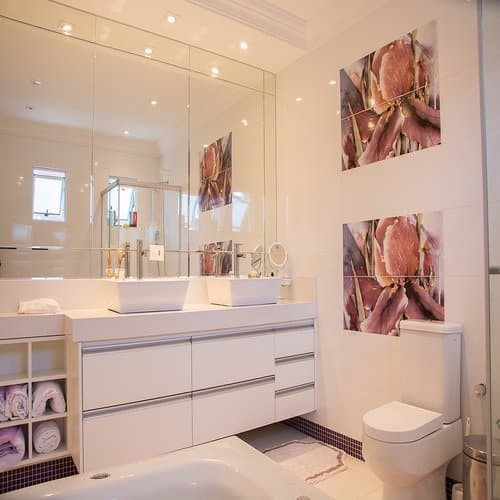
Why is waterproofing important? Waterproofing is the development of a “barricade” over the surfaces of structures, roofs, walls and the foundations of a building. It acts as a barricade because it prevents water penetrations through these surfaces. Wet areas are usually the spaces where sanitary fixtures are at or spaces that are exposed or subjected to high moisture, rain, or water. For example, bathrooms.
Bathroom leakage is a very common problem in HDBs and Condominiums in Singapore. Bathroom leakage can be quite an eyesore and challenging to solve as it involves the unit located directly above yours, thus, more planning and arrangements would be required. It is common and somewhat unavoidable that you will experience a bathroom leakage someday, especially for older apartments. So, what are some of the causes of a bathroom leakage?
Faulty Connections – Toilet connections tend to become loose it age. Rubber linings used to ensure watertight connections may also give way, causing a bathroom leakage. It is best to replace the worn out parts to prevent bathroom leakages. The great way to prevent this is to check your toilet connections from time to time to make sure that they are in good working conditions.
Tiled walls – A bathroom leakage can also be caused by tiles. The cause of this problem is pretty straightforward, which is the tile grout. Standard powdered grout is not waterproof as it is slightly porous and allows moisture to be absorbed. More ideally, epoxy grout should be applied in showers. The solution would be to rake out existing faulty grout and re-apply a waterproof formulation, followed by sealing up the finished grout with sealer.
Floor tiles – This is the most common cause for ceiling leakages. Similar to tiled walls, floor tiles usually cause leaks when the grouts have worn off. For this problem, owners can opt for our Clear Penetrative Waterproofing Treatment (CPT), a penetrative waterproofing chemical solution that is specially made for a non-invasive, no drilling and effective approach to waterproof and ensure water tightness of substrates. The chemicals can penetrate and react with the substrates to create a waterproofed layer and prevent water ingress on the floor tiles.