

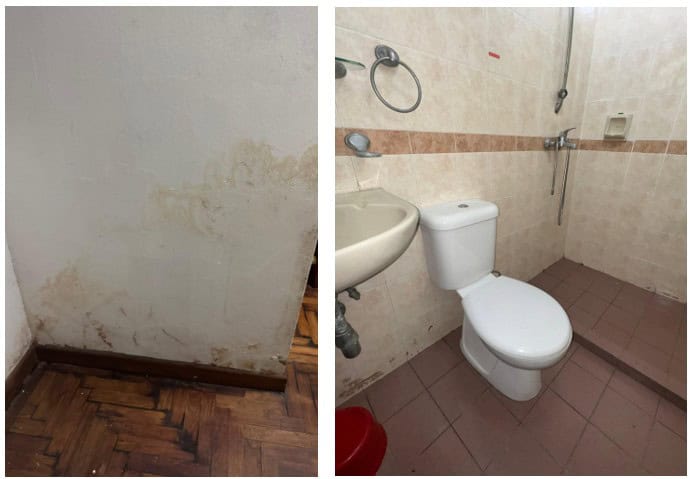
When water leakage appears in a home or building, one of the first questions people ask is:
“Is this a waterproofing problem or a plumbing problem?”
In Singapore, this confusion is extremely common, even among contractors. Many homeowners end up fixing the wrong thing, spending money on repairs that don’t solve the issue, only to see the leak return months later.
This confusion happens regularly due to Singapore’s buildings are predominantly reinforced concrete structures, with:
- Concealed water pipes embedded in slabs and walls
- Bathrooms and balconies waterproofed under tiles
- External walls exposed to heavy, wind-driven rain
- High humidity and frequent rainfall year-round
All these factors contribute in one way or another to the common confusion. Because water can travel inside concrete before becoming visible, the final leak point often gives misleading clues. A ceiling stain might look like a pipe leak but is actually rainwater seepage. A wall leak might seem like waterproofing failure but is caused by a hidden pipe.
Understanding the key differences between waterproofing and plumbing is critical. While both deal with water, they address very different systems, causes, and solutions. The real difference between waterproofing and plumbing based on how leaks actually behave on site.
What plumbing Actually Refers To
Plumbing refers to the engineered system of pipes, fixtures, fittings, and valves that are designed to deliver clean water into a property and safely remove wastewater out of it. Unlike waterproofing, which prevents unwanted water intrusion, plumbing manages water that is intentionally transported through a building for daily use.
A properly installed plumbing system ensures consistent water pressure, hygienic water supply, and efficient drainage. It also plays a critical role in maintaining sanitation, preventing contamination, and protecting the structural integrity of the building.
A complete plumbing system typically includes:
1. Cold and Hot Water Supply Pipes
These pipes distribute potable (clean) water from the main supply line to internal fixtures such as taps, showers, sinks, washing machines, and water heaters.
- Cold water pipes connect directly to the incoming water mains.
- Hot water pipes distribute heated water from storage heaters or instant heaters to bathrooms and kitchens.
They are usually made of materials such as copper, stainless steel, PPR, or uPVC, depending on building requirements and local regulations.
2. Sanitary Discharge Pipes
Also known as soil or waste pipes, these pipes carry used water and sewage away from toilets, sinks, showers, and floor traps.
- Soil pipes handle waste from toilets.
- Waste pipes carry greywater from basins, showers, and kitchen sinks.
These pipes are connected to the building’s main drainage stack and eventually discharge into the public sewer system.
3. Floor Traps and Drainage Pipes
Floor traps are installed in bathrooms, kitchens, balconies, and service yards to collect surface water and channel it into the drainage system. They include a water seal that prevents foul odours and pests from travelling back into the unit.
Drainage pipes connected to floor traps ensure proper flow and prevent water stagnation or backflow issues.
5. Pipe Joints, Valves, and Fittings
These components regulate, connect, and control water flow throughout the plumbing network.
- Valves allow sections of the system to be isolated for maintenance or repair.
- Pipe joints and connectors ensure leak-proof connections between pipe sections.
- Fittings such as elbows, tees, reducers, and couplings help direct and manage water flow efficiently.
Plumbing refers specifically to the controlled movement of water within a building through a structured pipe network. When plumbing components fail, such as cracked pipes, loose joints, or worn-out seals leaks may occur. However, issues like water seepage through walls, ceilings, or concrete slabs are often related to waterproofing failures rather than plumbing defects.
In Singapore, many homeowners opt for concealed plumbing pipes within walls, ceilings, or floor slabs for the aesthetics looks, hence often making it to detect and check for any breaches in the plumbing system.
Common Plumbing-Related Leak Characteristics
Common plumbing-related leaks occur when there is a defect within the internal water supply or drainage system of a property. Because plumbing systems are designed to carry water continuously—either under pressure through supply pipes or through regular discharge in drainage pipes—any failure can result in active and persistent leakage. Unlike waterproofing-related seepage, plumbing leaks are not dependent on weather conditions. They can occur during both rainy and dry periods, as the source of water originates from within the building itself.
One key characteristic of plumbing leaks is that they often worsen when water fixtures such as taps, showers, washing machines, or toilets are in use. Increased water flow or pressure can intensify the leakage, making damp patches, ceiling stains, or dripping more noticeable. In cases involving concealed pressurised pipes, leaks may continue day and night because the system remains constantly pressurised. This typically leads to continuous or recurring dampness in affected areas, where surfaces rarely have the chance to dry completely. In some situations, homeowners may also experience reduced water pressure at fixtures or observe unusually high water bills, both of which can indicate an undetected supply pipe leak.
Common plumbing issues include burst concealed pipes embedded within walls or concrete slabs, leaking pipe joints caused by aging or improper connections, cracked PVC drainage pipes that allow wastewater to escape during discharge, and faulty floor trap connections where improper sealing permits leakage beneath floor finishes or into the ceiling below. Because plumbing defects involve pressurised or actively flowing water, the volume of seepage is often higher compared to leaks caused by waterproofing failure. As a result, plumbing leaks tend to spread more quickly, cause more extensive damage, and persist even during prolonged dry weather until proper repair is carried out.
What Waterproofing Actually Refers To
Waterproofing deals with preventing external or non-pressurised water from entering building structures. It is not about pipes, but rather mainly about preventive barriers. Waterproofing systems protect areas such as:
- Bathrooms and toilets
- Balconies and planter boxes
- Flat roofs and RC roofs
- External walls and façades
- Basements
In Singapore’s unforgiving weather climate, waterproofing is especially important due to heavy rain, coupled with high humidity.
Common Waterproofing-Related Leak Characteristics
Common waterproofing-related leaks occur when the protective barrier designed to prevent water penetration has deteriorated, cracked, or failed. Unlike plumbing leaks, which originate from internal water supply or drainage systems, waterproofing defects are caused by external water intrusion. These leaks are typically influenced by environmental exposure and weather conditions rather than internal water usage.
One of the main characteristics of waterproofing-related leaks is that they tend to appear after heavy rainfall or extended periods of wet weather. The problem may become more severe during storms, especially when accompanied by strong winds that drive rainwater against walls, windows, balconies, or roofing surfaces. In many cases, the symptoms reduce significantly or even disappear during dry periods, only to return again when rain resumes. This weather-dependent pattern is a key indicator that the issue is likely related to waterproofing failure rather than plumbing.
Waterproofing leaks often manifest as visible stains on ceilings or walls, damp patches that slowly expand over time, bubbling or peeling paint, efflorescence (white powdery residue), or hairline cracks along joints and corners. These issues commonly recur on a seasonal basis, particularly during monsoon or rainy seasons, as repeated exposure to moisture gradually worsens the compromised area.
Typical examples of waterproofing problems include a failed bathroom waterproofing membrane that allows water to seep into the concrete slab, deterioration of balcony waterproofing systems due to constant exposure to sun and rain, external wall seepage caused by cracks or porous surfaces, roof waterproofing failure that permits rainwater penetration, and planter box leakage where water escapes through poorly sealed concrete structures.
In essence, waterproofing problems involve unwanted water entering the building envelope from the outside, rather than water escaping from internal supply pipes. Addressing these issues requires restoring the protective waterproofing barrier to prevent further water intrusion and structural damage.
Common Misdiagnoses Seen in Singapore Homes
In many homes across Singapore, water leakage issues are frequently misdiagnosed, leading to ineffective repairs, recurring damage, and unnecessary expenses. Because plumbing and waterproofing problems can produce similar visible symptoms—such as ceiling stains or damp patches—it is common for homeowners to address the wrong source of the leak.
One frequent mistake is treating rain-related seepage as a plumbing pipe leak. For example, a ceiling stain may appear after heavy rain, prompting the homeowner to call a plumber. After testing, no pipe defect is found, but the stained ceiling is patched and repainted. However, when the next storm arrives, the leak reappears. This scenario commonly occurs in living rooms, bedrooms, and wall corners where water intrusion from external walls or roof slabs is mistaken for an internal pipe issue.
Another common misdiagnosis is applying waterproofing treatment when the actual problem lies within the plumbing system. In some cases, internal waterproofing is installed on a bathroom ceiling below, while the true cause is a leaking water supply pipe in the unit above. Since the pipe continues to release pressurised water, moisture accumulates behind the newly applied waterproofing layer, often worsening structural damage and prolonging the issue.
It is also common to immediately blame the upstairs neighbour in apartment settings. While leaks can originate from the unit above, many cases are eventually traced to other sources such as external façade walls, roof slabs, balcony areas, or shared structural components. Jumping to conclusions may create unnecessary disputes and tension between neighbours when the root cause has not yet been properly identified.
Understanding and accurately diagnosing the true source of leakage is essential to prevent repeated repairs and avoid conflict. There are several practical steps homeowners can take to narrow down the likely cause. First, observe when the leak occurs. If the problem appears only during rainfall, waterproofing failure is more likely. If it happens during water usage or randomly throughout the day and night, plumbing issues are more probable.
Next, consider the location of the leak. Stains in the middle of a living room ceiling are often linked to waterproofing defects above, while leaks near bathroom fixtures may indicate either plumbing or failed waterproofing membranes. Dampness along external wall corners is typically associated with rainwater penetration.
Water behaviour also provides clues. Continuous dripping or active water flow usually points to a plumbing defect involving pressurised pipes. In contrast, damp patches that spread gradually and fluctuate with weather conditions are more consistent with waterproofing failure.
Finally, proper diagnostic testing is crucial. Pressure testing can help detect concealed pipe leaks, while controlled water ponding or spray tests can identify compromised waterproofing areas. Accurate assessment ensures that the correct repair method is applied, preventing further damage and unnecessary repair costs.
Solving waterproofing or plumbing should be addressed rightly
In conclusion, when the wrong issue is addressed, it often causes money to be spent without resolving the problem it becomes repetitive repairs and damage will worsen over time. The right way to approach water leakage is to accurately identify the root cause before jumping forward to any repair works.
Waterproofing and plumbing serve different purposes, solve different problems, and require different expertise. In Singapore’s building environment, confusing the two is one of the biggest reasons water leakage problems persist.
By understanding these key differences, especially how leaks behave over time, homeowners and building managers can make informed decisions, avoid unnecessary repairs, and resolve leakage issues effectively.
For homeowners struggling with persistent leaks, it’s important to address the root cause rather than guessing or relying on temporary fixes.
SWC Construction offers professional, hassle-free solutions that accurately identify and resolve waterproofing issues, whether it’s a bathroom ceiling, balcony, roof, or external wall leak. By combining expert diagnosis with proven waterproofing techniques, SWC Construction ensures long-lasting results, preventing recurring damage and costly repairs.
With Our team of licensed waterproofing specialists, you can stop leaks confidently, protect your home, and avoid unnecessary stress, knowing that the problem is properly resolved the first time.