

Bathroom water leakage is one of the most common waterproofing problems encountered in residential, commercial, and industrial properties across Singapore. While a minor leak may initially appear harmless, it often indicates an underlying waterproofing defect that can progressively worse if left untreated.
Many property owners attempt to resolve bathroom leaks using DIY waterproofing products such as waterproof paints, silicone sealants, or grout repair kits. Although these products may temporarily reduce visible signs of leakage, they rarely address the actual source of water ingress. In many cases, water continues to travel beneath the tiled surface through micro cracks, wall joint cracks, deteriorated waterproofing membranes, or hidden structural defects.
Without proper diagnosis, temporary repairs can delay appropriate remedial work, allowing moisture to spread further into the concrete slab and surrounding building elements. This may eventually lead to more extensive waterproofing failure, higher repair costs, and damage to neighbouring units.
Why Is Bathroom Waterproofing Critical?
Bathrooms are among the wettest areas within any building. Every shower, floor cleaning, and daily use exposes the floor, walls, and sanitary fittings to continuous moisture. Without an effective waterproofing system, water can gradually penetrate beneath the tiled finishes and into the structural concrete.
The primary function of a bathroom waterproofing system is to create a continuous waterproof barrier that prevents moisture from reaching the concrete slab and adjoining structural elements. When this barrier is compromised, water begins migrating through porous concrete and small openings, eventually appearing as visible leakage in other areas of the building.
Unlike plumbing leaks, waterproofing failures often develop gradually over several months or even years. Water travels along the path of least resistance before eventually emerging as ceiling brown stained marks, concrete ceiling leaks, bubbling paint, mould growth, or damp walls. By the time these symptoms become visible, considerable moisture may already exist within the concrete structure.
Early identification and repair are therefore essential to prevent progressive structural deterioration and unnecessary repair costs.
Common Areas Prone to Bathroom Water Leakage
Bathroom leakage rarely originates from a single location. Multiple building components work together to prevent water ingress, and failure of any one component may allow moisture to penetrate into the surrounding structure.
One of the most common causes is the deterioration of the waterproofing membrane beneath the bathroom floor. Waterproofing membranes naturally age over time and are subjected to constant moisture exposure, structural movement, and thermal expansion. As the membrane loses flexibility, its waterproofing performance gradually declines.
Another frequent source of leakage involves bathroom wall cracks and wall joint cracks. Even hairline openings may permit water to enter behind wall tiles and migrate through the concrete slab before becoming visible elsewhere. Because concrete naturally expands and contracts due to daily temperature fluctuations, repeated heat expansion and contraction can gradually enlarge these cracks.
Deteriorated tile grout is another contributing factor. Although grout helps secure tiles and improves aesthetics, it is not designed to function as the primary waterproofing barrier. Once grout begins to wear or crack, water can easily seep beneath the tiled surface if the underlying waterproofing system has already deteriorated.
Bathroom sealants also require periodic maintenance. Silicone installed around shower screens, bathtubs, wash basins, and sanitary fixtures will eventually deteriorate due to age, cleaning chemicals, ultraviolet exposure, and continuous movement. Seal damage or sealant worn off due to heat expansion often allows water to penetrate vulnerable joints.
Not every bathroom leak is caused by waterproofing failure. Plumbing defects such as a tap leak, pipe leak, or concealed pipe leak frequently produce symptoms similar to waterproofing problems. In upper-floor bathrooms located beside external walls, rainwater seepage may also contribute to moisture penetration, making accurate diagnosis even more important.
DIY Bathroom Waterproofing that Homeowners can do safely
Routine bathroom maintenance plays an important role in prolonging the lifespan of waterproofing systems. Homeowners can safely carry out several minor maintenance tasks that help minimise moisture penetration and maintain the overall condition of the bathroom.
These include replacing deteriorated silicone sealant around sanitary fittings, repairing small sections of damaged tile grout, tightening loose plumbing fittings, replacing worn tap washers, cleaning blocked floor traps, and ensuring adequate bathroom ventilation to reduce excessive humidity.
Such maintenance helps prevent minor issues from developing into larger problems. However, it is important to recognise that these works should not be mistaken for waterproofing repairs.
If water has already penetrated beneath the tiled finishes or into the concrete slab, replacing grout or applying new sealant will not restore the failed waterproofing membrane. Surface maintenance can improve the appearance of the bathroom but cannot permanently stop water migrating through the building structure.
Limitations and Risks of DIY Waterproofing
DIY waterproofing products are widely available and often marketed as quick solutions for leaking bathrooms. While these products may temporarily mask visible symptoms, they seldom eliminate the underlying cause of leakage.
One of the greatest challenges in waterproofing is that water rarely appears directly beneath the point of entry. Moisture can travel considerable distances through micro cracks, porous concrete, construction joints, and reinforcement voids before becoming visible. As a result, applying waterproof paint or surface coatings to the visible leak location often fails to stop the actual water ingress.
Incorrect diagnosis is another common issue. A homeowner may assume the waterproofing membrane has failed when the actual problem is a concealed plumbing leak, deteriorated sealant, or rainwater seepage entering through adjacent external walls. Attempting repairs without accurately identifying the sources of water leakage may delay proper remedial work and allow the damage to worsen.
Repeated DIY repairs also increase the risk of trapping moisture beneath the tiled surface, accelerating mould growth, concrete deterioration, corrosion of steel reinforcement, and eventual structural damage.
Bathroom Waterproofing Repairs That Require Professional Expertise
Certain waterproofing defects require specialised equipment, technical expertise, and professional repair techniques that cannot be replicated through DIY methods.
These include failed waterproofing membranes beneath tiled finishes, active concrete seepage, structural crack repairs, PU Injection grouting, bathroom concrete slab damage, concrete ceiling leaks, concealed pipe leak investigations, and advanced moisture mapping using thermal leak detection.
Professional waterproofing contractors understand how water migrates through different building materials and can accurately determine whether leakage originates from plumbing systems, structural movement, waterproofing defects, or external water penetration. This ensures the recommended repair addresses the root cause rather than the visible symptoms.
Case Study Example; Non-Hacking Bathroom Waterproofing Using PU Injection Grouting
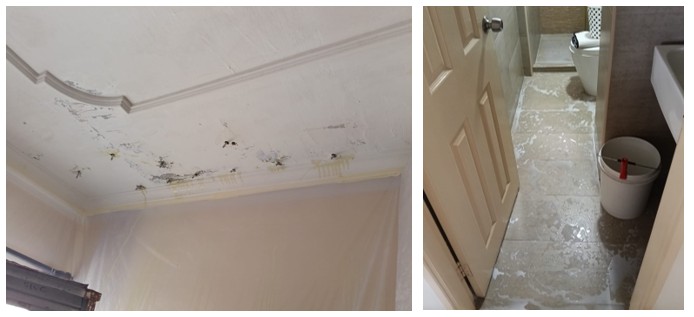
A condominium homeowner contacted SWC Construction after the neighbour downstairs reported water stains appearing on their bathroom ceiling. Although the upstairs bathroom looked perfectly normal, the leakage became more noticeable after every shower.
Instead of recommending immediate hacking and replacement, SWC Construction first conducted a comprehensive site inspection to accurately identify the source of the leakage. The assessment revealed that water was infiltrating through fine micro-cracks within the concrete slab, while the deteriorated waterproofing and weakened floor joint seals allowed moisture to penetrate deeper into the structure.
Rather than replacing the existing finishes unnecessarily, the team identified a targeted non-hacking waterproofing solution to effectively address the root cause of the water ingress. High-pressure PU injection grouting was carried out to seal the internal cracks within the concrete slab from the lower unit’s bathroom ceiling. This was followed by the application of a clear penetration waterproofing treatment on the bathroom floor, allowing the solution to seep into and seal the critical tile grout joints, thereby preventing further water ingress. This method effectively resolved the leakage without the need to remove any floor tiles.
Within days, the leakage stopped completely. The homeowner confirmed that moisture levels had returned to normal, and the downstairs ceiling gradually dried without further water seepage. The homeowner avoided a costly bathroom renovation while restoring the waterproofing performance of the existing structure.
Both homeowners were delighted that the bathroom seepage problem was resolved quickly and effectively, without the inconvenience of extensive hacking or re-waterproofing the entire bathroom.
Satisfied with the results and our service and shared their positive experience by leaving us a genuine Google review.
Choosing the right Waterproofing contractor
When it comes to bathroom waterproofing, choosing the right contractor is just as important as choosing the right repair method. An experienced waterproofing specialist can distinguish between a failed waterproofing membrane, a concealed pipe leak, structural cracks, or rainwater seepage, ensuring that the real cause is resolved rather than simply covering up the symptoms.
SWC Construction has built its reputation by delivering reliable, long-lasting waterproofing solutions for homeowners, MCSTs, commercial buildings, industrial facilities, and HDB properties throughout Singapore. Every project begins with a thorough inspection to identify the true source of water leakage before recommending the most suitable solution, whether that involves PU Injection grouting, waterproofing sealant replacement, thermal leak detection, or other non-hacking waterproofing methods.
As a BCA-registered waterproofing contractor, BizSafe Level 3 certified company, and HDB-appointed waterproofing contractor, SWC Construction is committed to professional workmanship, safety, and compliance with Singapore’s building standards. Backed by one of the highest numbers of positive Google reviews in the waterproofing industry, the company has earned the trust of homeowners and property managers across Singapore.
If you’ve noticed damp walls, bathroom wall cracks, ceiling brown stains, mould growth, or signs of water seepage, don’t wait until the damage becomes more extensive. A professional inspection today could save you from a far more expensive repair tomorrow.
Let SWC Construction help restore your bathroom with proven, long-lasting waterproofing solutions that protect your home and your investment.