

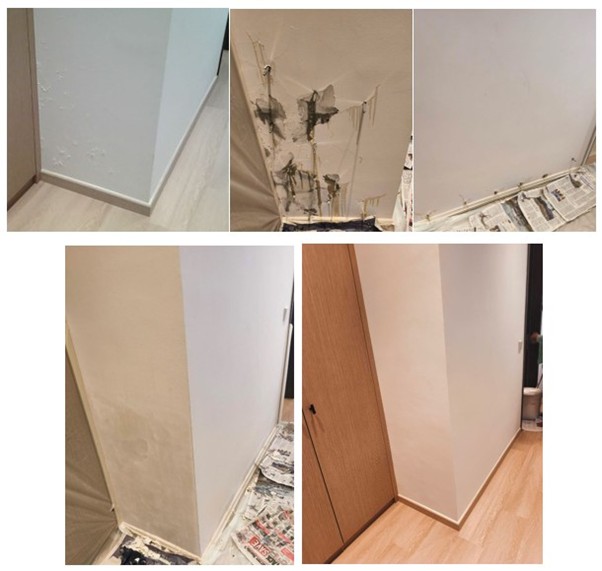
Have you noticed damp patches, peeling paint or a wall brown stained mark near your bathroom, kitchen sink or water point? Perhaps the wall feels damp even after repainting, or the same patch keeps returning despite repeated repairs.
These are common signs of wall dampness and water seepage. While the problem may look like rising damp, moisture can also enter through failed bathroom waterproofing, wall cracks, concealed pipe leaks or defects within the concrete structure.
For homeowners, property owners, condominium MCST maintenance teams and commercial building managers in Singapore, identifying the actual source of water leakage is the first step towards a lasting repair.
Simply repainting the affected wall or applying a waterproof coating may improve its appearance temporarily, but it will not resolve the underlying problem if water continues to enter the wall.
One possible solution is PU Injection grouting, a non-hacking waterproofing method that can help seal suitable cracks and water leakage pathways within concrete and masonry structures. When applied under the right conditions, it can be particularly useful in older condominiums, residential properties and commercial buildings where extensive hacking would cause unnecessary disruption.
What Is Rising Damp in Walls?
Common Signs of Rising damp is a type of moisture problem that occurs when water from the ground travels upwards through porous building materials, such as concrete, brickwork, mortar and plaster. This movement happens through tiny interconnected pores within the material, a process known as capillary action. As moisture gradually moves upwards, it can affect the wall’s internal structure and surface finishes, resulting in damp patches, peeling paint, damaged plaster and discolouration.
Rising damp is commonly associated with ground-floor walls, basement walls and areas where moisture can enter from the surrounding soil. It may occur when a damp-proof course is missing, damaged or ineffective, or when the wall remains in prolonged contact with a source of ground moisture. In some buildings, moisture can also move through porous materials from persistently wet areas, although this should not automatically be classified as genuine rising damp.
In Singapore, wall dampness is not always caused by moisture rising from the ground. Many homes, condominiums and commercial buildings have bathrooms, toilets, kitchens and water points located directly beside or behind internal walls. When a wall becomes damp in these locations, the problem may be related to a failed bathroom waterproofing membrane, a concealed pipe leak, deteriorated sealant or water seeping through cracks and joints in the concrete substrate. Therefore, it is important to distinguish genuine rising damp from other forms of water seepage before deciding on a repair method.
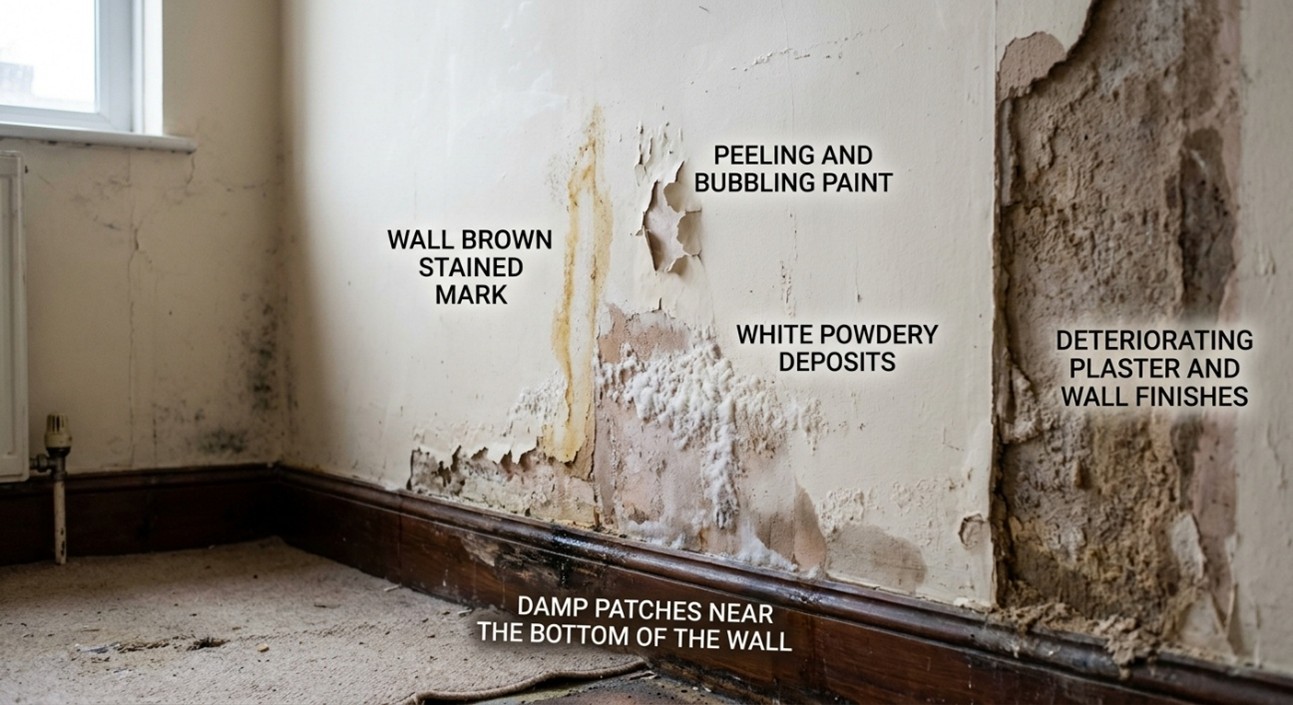
Common Signs of Rising Damp
Property owners may notice several warning signs when moisture accumulates within a wall:
Damp patches near the bottom of the wall:
Moisture may appear along the skirting or lower wall surface and gradually spread upwards.
Peeling or bubbling paint:
Persistent moisture can weaken the bond between the paint and the underlying plaster, causing the paintwork to blister, flake or peel.
Wall brown stained mark:
Yellowish or brownish discolouration may develop as moisture carries dissolved substances through the wall and deposits them on the surface.
White powdery deposits:
Efflorescence may appear when water carries soluble salts to the wall surface and evaporates, leaving behind visible deposits.
Deteriorating plaster and wall finishes:
Prolonged dampness can cause plaster to soften, crumble or detach from the underlying surface.
Musty smells and possible mould growth:
Persistently damp conditions can encourage mould growth, particularly in areas with poor ventilation.
Repeated damage after repainting:
The same damp patch may return if the underlying moisture source has not been addressed.
Although these symptoms are common indicators of moisture problems, they do not confirm rising damp on their own. Similar signs can result from plumbing defects, bathroom water seepage, condensation or other forms of waterproofing failure.
Why Do Walls Become Damp Near Bathrooms and Water Points?
Walls close to bathrooms and water points are exposed to frequent moisture, plumbing connections and changes in temperature. When waterproofing systems or plumbing components deteriorate, water may gradually penetrate the surrounding structure.
1.Failed Bathroom Waterproofing Membrane
Bathrooms depend on a properly installed waterproofing membrane beneath the floor finishes and, where required, behind wall tiles.
Over time, the waterproofing membrane worn out condition may develop due to ageing, material deterioration, movement within the building or poor workmanship during the original installation.
When waterproofing failure occurs, water from showering, floor washing or other daily activities may seep through the floor or wall junctions. It can travel through the concrete slab, wall joints or adjoining masonry before appearing as dampness in another location.
For example, a bedroom wall adjoining an upstairs bathroom may develop damp patches even though the bedroom itself has no water source.
2. Concealed Pipe Leak
A concealed pipe leak is another common cause of wall dampness.
Water supply pipes, drainage pipes and concealed plumbing connections may run inside walls, floors or ceiling voids. A small pipe leak concealed within the structure may continue for days or weeks before visible signs appear.
Possible warning signs include:
- Damp patches that remain even when the bathroom is not being used.
- Water meter movement when no water is intentionally being consumed, where applicable.
- Localised wall dampness that gradually spreads.
- Persistent water seepage around pipe connections or plumbing points.
Thermal leak detection can help identify unusual temperature variations that may indicate the presence of water leakage within walls, ceilings or concrete structures. However, thermal imaging alone may not be sufficient to confirm every concealed pipe leak.
Depending on the pipe material, water temperature and site conditions, an Ultrasonic Leak Detector can be used as an additional detection tool to further investigate and help pinpoint the suspected leakage location.
By combining suitable leak detection methods, the inspection can provide a more comprehensive assessment of the possible water leakage source and help determine the appropriate rectification works.
3. Wall Cracks and Micro Cracks
Wall cracks can develop as buildings age and materials experience movement. Some cracks are superficial, while others may create pathways for water penetration.
Micro cracks within concrete, plaster or mortar joints may be difficult to see with the naked eye. Nevertheless, water can gradually pass through these openings, particularly when the wall is repeatedly exposed to moisture.
Wall joint cracks are also potential entry points, especially where different construction materials meet or where wall-to-floor junctions are exposed to repeated wetting.
In some cases, concrete grout hairline crack defects or cracks associated with concrete grouting expansion and structural movement may contribute to water seepage. The appropriate repair depends on the crack’s location, depth, activity and the condition of the surrounding material.
4. Hot/Cold Expansion and Sealant Deterioration
Building materials expand and contract as temperatures change. This hot/cold expansion can gradually place stress on joints, sealants and connections between different materials.
For example, sealant around bathroom fixtures, pipe penetrations, window frames and wall joints may deteriorate over time. Sealant worn off due to heat expansion can leave small gaps through which water enters.
If seal damage is not rectified, moisture may penetrate the surrounding concrete substrate or masonry and eventually appear on the opposite side of the wall.
Replacing deteriorated sealant may solve a localised problem, but it will not be sufficient if water has already entered through deeper cracks or a failed waterproofing system.
5. Concrete Surface Damage
Water from bathroom may pass through defective loosen tile grout and joints, leading to waterproofing failure, micro cracks or other openings in the concrete surface and even the flooring.
The resulting concrete surface damage/stain/leak may appear a damp wall or peeling paint on the adjacent wall. A bathroom leak may also cause brown stains, mould growth and deterioration of wall finishes.
In these situations, the visible damp wall may not be directly the actual source of leakage. Water can travel sideways through joints and porous building materials before emerging at a weaker point.
This is why investigating the leakage pathway is often more important than treating the visible stain alone.
How to Fix Rising Damp and Wall Seepage?
The best repair depends on the actual cause of the moisture. There is no single waterproofing method that can resolve every type of damp wall.
Rectify the Original Source of Water
If a plumbing defect is responsible, the faulty pipe or connection must be repaired. If water is entering through deteriorated sealant, the damaged sealant should be removed and replaced with a suitable material.
Where the problem originates from a failed bathroom waterproofing membrane, the waterproofing system may need to be reinstated. Depending on the site conditions, this could involve removing floor finishes and carrying out new waterproofing works.
For genuine rising damp, the investigation should consider ground moisture, the effectiveness of any damp-proof course and moisture migration through the wall. PU Injection grouting is not a universal substitute for a damp-proof course or a treatment specifically designed for rising damp.
Consider PU Injection Grouting for Suitable Leakage Pathways
PU Injection grouting is a practical and effective waterproofing repair method for suitable cases of wall dampness, water seepage and concrete leakage. Instead of simply repainting a stained wall or applying surface coatings that may only provide temporary relief, this treatment targets the cracks, joints and leakage pathways through which water enters the structure. It is particularly useful for damp walls adjoining bathrooms, toilets and water points, where water may penetrate through concrete cracks, wall joints or other defects.
The process generally involves identifying the affected area, drilling small injection holes where necessary, installing injection packers and injecting a suitable polyurethane (PU) material under controlled pressure. Depending on the material formulation and moisture conditions, the PU may expand and fill suitable cracks or gaps, helping to seal the leakage pathway. Once the material has cured, the injection points can be closed and the affected surfaces repaired as required.
The exact procedure depends on the type of PU material, the condition of the substrate and the nature of the leakage.
PU Injection grouting is suitable for wall seepage and concrete leakage problems, PU Injection grouting offers several practical benefits:
- Non-hacking waterproofing method:
It can often be carried out without removing large areas of tiles, plaster or concrete.
- Targets the leakage pathway:
The injected material can penetrate suitable cracks and openings within the structure.
- Reduces disruption:
It may help avoid extensive demolition in occupied homes, older condominiums and operating commercial buildings.
- Useful for localised repairs:
It can be suitable for certain concrete cracks, construction joints and water seepage points.
- Helps preserve existing finishes:
Where extensive hacking is unnecessary, the surrounding tiles and finishes may remain intact.
- Potentially more efficient repairs:
A targeted injection treatment may reduce reinstatement work compared with opening up a large area, subject to site conditions.
- Suitable for selected wet-area leakage problems:
It may help address water pathways associated with bathroom leakage, wall dampness and some inter-floor leaks.
However, the long-term effectiveness of the repair depends on identifying the actual source of leakage and selecting the appropriate treatment. If a concealed pipe leak is responsible, the faulty pipe must be rectified. If the bathroom waterproofing membrane has deteriorated extensively, additional waterproofing works may be required. Genuine rising damp may also need a different treatment to address moisture travelling upwards from the ground. Active structural movement and recurring cracks must be assessed before injection works are recommended.
For property owners, MCST maintenance teams and commercial building managers dealing with recurring wall seepage or concrete leakage, PU Injection grouting is a repair solution worth considering before committing to extensive hacking works, provided the site conditions are suitable.
A proper inspection helps identify the leakage pathway and determine the most appropriate treatment. Rather than spending repeatedly on temporary surface repairs, engaging an experienced waterproofing contractor to assess the problem and recommend suitable PU Injection grouting can help achieve a more durable result while minimising disruption to the property.
Wall dampness, bathroom leakage and concrete water penetration can worsen if the underlying cause is not identified early. For older residential properties, condominiums and commercial buildings, choosing the right repair method is important to balance effectiveness, accessibility, disruption and cost.
SWC Construction provides waterproofing solutions for residential, condominium and commercial properties in Singapore. We understand that every leakage problem is different. Whether you are dealing with a damp wall adjoining a bathroom, a concealed pipe leak, a cracked concrete wall or an inter-floor leak affecting the unit below, the appropriate repair should be based on the actual site conditions.
SWC Construction is a BCA-registered waterproofing contractor, holds BizSAFE Level 3 and is an HDB-appointed waterproofing contractor, as stated by the company. Prospective clients can also refer to our Google reviews to learn about feedback shared by our customers.
Whether you are a homeowner experiencing recurring wall seepage, a property owner concerned about waterproofing failure, a commercial building manager responsible for maintenance, or an MCST team handling residents’ leakage complaints, SWC Construction is ready to assist.
Contact SWC Construction today to arrange an on-site survey or inspection. Our team will assess your waterproofing concerns and recommend a customised repair solution suited to your property’s condition and requirements.
Let us help you address your waterproofing problems with a practical approach that minimises unnecessary disruption and works towards a lasting solution.